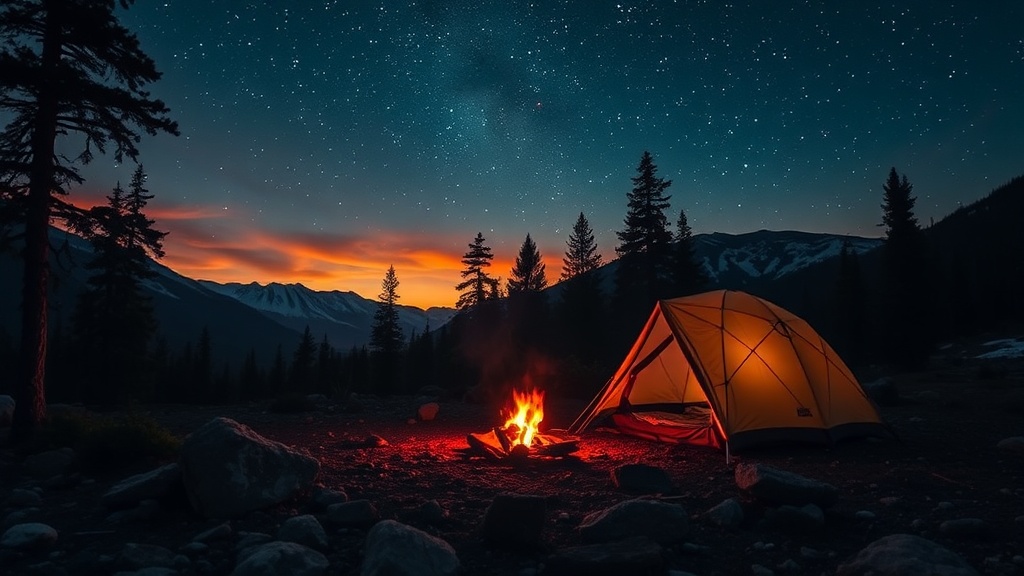
7 key Wild Camping Tips for Your First Backcountry Adventure

Choose the Right Location and Check Local Regulations
Invest in Lightweight, Weather-Appropriate Gear
Master the Leave No Trace Principles
Plan Your Water Strategy Carefully
Learn Basic Navigation and Emergency Preparedness
Wild camping puts you miles from paved roads, established campsites, and cell service. That's the appeal—and the risk. This guide covers seven practical strategies that separate a memorable first backcountry trip from a miserable survival story. Whether you're planning an overnight in Arizona's Coronado National Forest or a week in the Sierra Nevada, these tips will keep you safe, legal, and comfortable without hauling fifty pounds of gear.
What Is Wild Camping and Is It Legal Everywhere?
Wild camping—also called dispersed camping, primitive camping, or backcountry camping—means setting up shelter outside designated campgrounds, typically on public land without amenities like toilets, fire rings, or potable water. It's legal on most Bureau of Land Management (BLM) lands and in national forests, but rules vary dramatically by location. Some wilderness areas require permits. Others ban camping within 200 feet of water sources. National parks usually restrict dispersed camping to specific zones.
Before heading out, check the specific regulations for your target area. The U.S. Forest Service website provides detailed maps showing where dispersed camping is permitted. Some regions—like much of the Appalachian Trail corridor—allow stealth camping but with strict Leave No Trace requirements. Others, particularly high-use alpine zones, prohibit it entirely during sensitive seasons.
The golden rule? Camp at least 200 feet from trails, water, and roads unless posted otherwise. This protects vegetation and keeps human presence from dominating wildlife corridors. When in doubt, call the local ranger station. They're usually happy to point you toward legal spots that match your experience level.
How Do You Find Safe and Legal Wild Camping Spots?
Start with mapping apps designed for backcountry navigation, then verify against official agency resources. Several digital tools make the search easier:
- Gaia GPS — Layers for public land boundaries, MVUM (Motor Vehicle Use Maps), and cell coverage
- CalTopo — Superior for route planning and sharing; free tier is generous
- iOverlander — User-submitted dispersed camping locations with photos and recent condition reports
- FreeRoam — Filters for accessibility, weather, and proximity to services
That said, don't rely solely on crowd-sourced pins. Conditions change. A site listed as "perfect" last summer might have washed out in a flash flood. Always cross-reference with current Forest Service or BLM motor vehicle maps if you're driving to your spot.
Here's the thing about site selection: flat ground isn't enough. Look for established campsites—compacted soil, fire rings (even if you don't use them), cleared tent pads. Creating new sites damages vegetation that takes years to recover. In popular areas like Sedona's Red Rock Country or Colorado's San Juan Mountains, the impact is visible from satellite.
"The best campsites are found, not made." — Leave No Trace Center for Outdoor Ethics
Worth noting: elevation matters more than most beginners realize. That idyllic meadow at 10,000 feet? Temperatures drop 20 degrees after sunset. Weather flips fast above treeline. If you're new to wild camping, stay below 8,000 feet for your first few trips. Your sleep system will perform better, and you'll have more margin for error.
What Gear Do You Actually Need for Wild Camping?
Not much—but what you bring needs to work. The following table breaks down core categories with specific product recommendations that have proven reliable in the field:
| Category | Budget Option | Performance Option | Weight |
|---|---|---|---|
| Shelter | REI Trailmade 2 ($189) | Big Agnes Copper Spur HV UL2 ($450) | 3 lb 4 oz / 2 lb 12 oz |
| Sleep System | Kelty Cosmic 20 ($100) | Western Mountaineering Alpinlite ($600) | 3 lb / 1 lb 13 oz |
| Pad | Therm-a-Rest Z Lite Sol ($55) | NEMO Tensor Insulated ($185) | 14 oz / 1 lb 3 oz |
| Stove | MSR PocketRocket 2 ($45) | Jetboil MiniMo ($145) | 2.6 oz / 14 oz |
| Water Treatment | Sawyer Squeeze ($37) | Platypus GravityWorks ($110) | 3 oz / 11.5 oz |
| Pack | Gregory Stout 45 ($180) | Osprey Exos 48 ($220) | 3 lb 9 oz / 2 lb 15 oz |
The catch? Price doesn't always equal performance for beginners. A $100 sleeping bag from Kelty keeps you warm at 20°F if you're wearing layers. A $600 Western Mountaineering bag is lighter and more compressible—but that matters more when you're carrying everything on your back for ten days, not two.
Water treatment is non-negotiable. Giardia isn't a myth. The Sawyer Squeeze screws onto standard disposable bottles (Smartwater 1-liter bottles work perfectly) and filters 0.1 microns. Backflush it occasionally and it'll last years. For groups, the Platypus GravityWorks lets you filter while setting up camp—no pumping required.
Clothing: Cotton Kills (Seriously)
Pack synthetic or wool layers exclusively. Cotton retains moisture—sweat, rain, dew—and loses insulating value when wet. Merino wool (Smartwool, Icebreaker) regulates temperature across a wide range. Synthetic base layers (Patagonia Capilene) dry faster and cost less.
Bring a puffy jacket even in summer. Nights get cold. A down or synthetic insulated layer (the Patagonia Nano Puff is a proven standby) packs small and provides insurance against hypothermia if conditions deteriorate.
How Do You Handle Food and Water in the Backcountry?
Bear hangs work—when done correctly. Most beginners hang food too low, too close to the trunk, or from branches that can't support the weight. The proper method requires suspending your food bag at least 12 feet off the ground and 6 feet from the tree trunk. If that sounds complicated, it is. Many experienced campers have switched to bear canisters.
Bear canisters (the BearVault BV450 or Wild Ideas Bearikade) are required in several high-traffic wilderness areas, including Yosemite, the Eastern Sierra, and portions of the Rockies. They're heavy (2-3 pounds) and bulky. They're also foolproof—no midnight bear encounters, no accidentally dropping your food from a broken branch.
Water planning separates successful trips from dehydration headaches. Carry 3-4 liters capacity and know your sources. Desert camping in the Southwest—around Tucson, for example—often means carrying all water for the entire trip. In wetter regions, plan on treating 2-3 liters per day for drinking and cooking.
Here's the thing about meal planning: calories per ounce matter. Peanut butter (165 calories/ounce), olive oil (240 calories/ounce), and nuts beat bulky freeze-dried meals for weight efficiency. That said, a hot dinner improves morale enormously after a hard day. Mountain House and Backpacker's Pantry make decent options—just add boiling water to the bag.
What Safety Precautions Matter Most for Solo Wild Camping?
Tell someone exactly where you're going and when you'll check in. Not "the mountains near Flagstaff." Specific trailheads, planned campsites, expected return time. If you're not back by the designated hour, your contact should call search and rescue.
Carry the ten essentials—modernized:
- Navigation (map, compass, GPS device—not just your phone)
- Headlamp (Black Diamond Spot 400 is reliable and waterproof)
- Sun protection (sunglasses, sunscreen, SPF lip balm)
- First aid (Adventure Medical Kits UltraLight/Watertight .7 covers basics)
- Knife (Mora Companion stainless—$17, bombproof)
- Fire (waterproof matches, lighter, firestarter)
- Shelter (emergency bivy like SOL Escape)
- Extra food (beyond minimum expectation)
- Extra water (or purification capability)
- Extra clothes (rain shell, insulation layer)
Know the signs of altitude sickness—headache, nausea, fatigue, difficulty sleeping—especially if you're coming from sea level to the Colorado Plateau or High Sierra. Descent is the only cure. Don't push through symptoms above 10,000 feet.
Lightning kills more hikers than bears. If you hear thunder, you're within striking distance. Get below treeline, off ridges, away from isolated trees. Crouch on your sleeping pad (insulation from ground current), feet together, head down. Wait thirty minutes after the last thunderclap before moving.
How Do You Practice Leave No Trace in Practice?
Pack out everything—including toilet paper and food scraps. Fruit peels and nut shells don't biodegrade quickly in arid environments. (Arizona's desert ecosystems break down organic matter slowly—an apple core can persist for months.)
Human waste requires specific handling. In most wild camping areas, dig a cathole 6-8 inches deep, at least 200 feet from water, trails, and camp. Some fragile environments—desert cryptobiotic soils, river corridors, popular alpine zones—require packing out waste in WAG bags (sanitary toilet systems). The Leave No Trace Center for Outdoor Ethics provides detailed guidance for different ecosystems.
Campfires leave scars. Use a stove for cooking. If you must have a fire, use established rings, keep it small, burn only dead and downed wood (nothing thicker than your wrist), and ensure it's dead out—drown it, stir it, drown it again. In the Southwest, fire restrictions are common from May through October. Check before you go.
What's the Best Way to Build Skills Before Your First Trip?
Start in your backyard or a nearby campground. Set up your tent in the rain (use a sprinkler if necessary). Cook dinner on your stove when you're already hungry. Figure out what breaks, what confuses you, what's annoying—while there's still a hardware store down the street.
Then graduate to car camping near trailheads. Sites at the end of Forest Service roads let you test wild camping skills—water filtration, navigation, bear bag hangs—without committing to a multi-mile hike out if something goes wrong. The Catalina State Park area near Tucson offers excellent practice terrain: desert camping with reliable water sources and bailout options.
Take a wilderness first aid course. Two-day WFA (Wilderness First Aid) classes run about $200 through NOLS or REI. You'll learn to assess injuries, recognize environmental emergencies, and improvise when help is hours away. It's practical knowledge that transfers to everyday life.
Join a community. Local hiking clubs, Reddit's r/WildCamping, and regional Facebook groups provide current condition reports and moral support. Experienced campers remember being beginners. Most are generous with advice if you ask specific questions.
Your first wild camping trip doesn't need to be an expedition. One night, three miles from the trailhead, good weather forecast. Build from there. The backcountry rewards preparation—but it forgives small mistakes when you've covered the fundamentals. Safe travels out there.