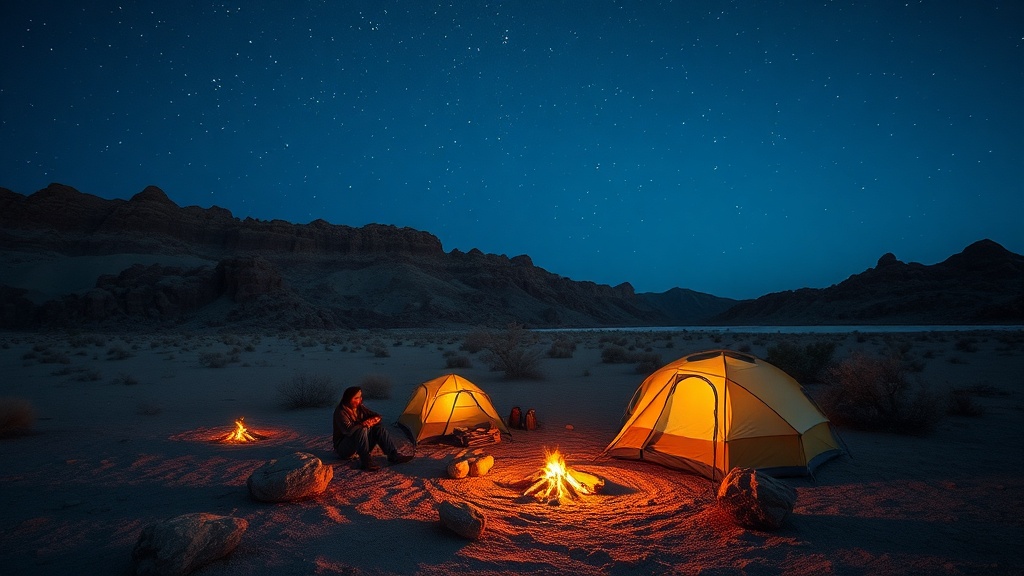
Reading the Desert: Wild Camping Tactics for Parched and Beautiful Terrain

This post covers the specific skills you need for wild camping in arid environments—finding hidden water sources, managing extreme temperature shifts, selecting gear that handles sand and abrasion, and reading terrain that looks featureless but isn't. Desert wild camping offers solitude you won't find in crowded mountain corridors, but the margin for error shrinks dramatically when water is scarce and help is distant.
What Makes Desert Wild Camping Different from Mountain or Forest Trips?
Most experienced campers cut their teeth in forests or alpine zones—places where water flows predictably and shade grows on trees. The desert operates on entirely different logic. Out here, moisture hides. Temperatures can swing fifty degrees between noon and midnight. And the ground that looks solid from a distance might be crusty playa that cracks under your foot or soft dune that swallows tent stakes whole.
The desert rewards observation. A practiced eye learns to spot subtle clues: darker patches of soil indicating subsurface moisture, particular vegetation clusters that signal water tables within digging distance, rock formations that create natural windbreaks and thermal shelters. These aren't mystical skills—they're pattern recognition developed through repeated exposure. You start noticing that certain shrubs only root where water exists year-round. You learn to read the way sand ripples form around obstacles, indicating prevailing wind directions that'll determine your campsite comfort at 3 AM when the temperature drops and the breeze picks up.
Solitude hits different here too. In forested backcountry, you're rarely more than a ridge away from another party. The desert sprawls. You can walk for days without crossing a trail marker or seeing another human footprint. That isolation feeds something ancient in us—wide horizons, star-filled skies unfiltered by canopy, the raw geometry of geology exposed. But it also means self-rescue is your only rescue. Cell signals fade fast. Emergency services might be hours away even if you can transmit coordinates.
Where Do You Find Water When Every Source Looks Dry?
Water procurement separates competent desert campers from statistics. You can't carry enough for multi-day trips—not realistically. A gallon weighs eight pounds. Three days of conservative consumption adds sixty pounds to your pack. The math doesn't work. You must locate water in the environment.
Start with the obvious: topo maps marked with seasonal springs. These aren't guaranteed—drought shifts water tables, human activity diverts sources, cattle can foul what exists. But they're starting points. Better sources hide in plain sight. Canyons with north-facing walls often hold seeps where moisture condenses and pools in shadowed pockets. The National Park Service maintains excellent resources on identifying these microclimates—study them before your first trip.
Wildlife trails lead to water. If you see concentrated animal tracks—especially birds congregating at dawn and dusk—follow them. Deer, coyotes, rabbits, they all need water daily. Their trails converge on sources. Look for green vegetation in otherwise brown terrain. Mesquite, cottonwood, willow—these trees send roots deep. Where they cluster thickly, dig. Often you'll hit moisture within a foot of surface, especially in sandy washes.
Technical solutions exist too. Solar stills work but require patience and material—plastic sheeting, collection vessels, digging energy. They produce limited output. Better is learning to read the geology. Fault lines often channel underground water. Alluvial fans at canyon mouths trap moisture. Basins between rock formations collect runoff. Each desert province has different characteristics. The Sonoran where I camp near Tucson differs dramatically from the Mojave or Great Basin. Local knowledge trumps general principles.
How Do You Protect Yourself from Temperature Swings at Night?
Desert newbies consistently underestimate nighttime cold. They pack for the heat they felt at noon and shiver through until morning. The dry air lacks moisture to retain daytime warmth. Once the sun drops, radiation escapes fast. I've seen twenty-degree mornings in the Sonoran after eighty-degree afternoons. Your sleep system must handle this range.
Site selection matters enormously. Canyons and washes act as cold sinks—air settles, temperatures plummet. Higher benches above valley floors catch breezes but stay warmer. Rock formations radiate stored heat through the night if you position yourself against southern or western faces. These thermal mass effects can mean the difference between comfortable sleep and hypothermic misery.
Layering strategy changes in arid environments. Cotton kills in mountains—here it's merely questionable. The same evaporative cooling that endangers you in cold forests provides relief during midday heat. I carry both synthetic base layers and lightweight cotton for the hike in, switching to insulation before dusk. Down works beautifully in dry cold; moisture management matters less here than in humid climates. REI's desert camping guides offer solid gear recommendations for these specific conditions.
Your shelter faces different challenges too. Freestanding tents handle rocky ground where stakes won't penetrate. Sand anchors or deadman techniques secure guy lines in loose soil. Mesh panels provide ventilation during hot afternoons but let cold air flow at night—bring a tarp or have enough quilt coverage to compensate. Some experienced desert campers forego tents entirely, using tarps pitched low to block wind while preserving views of the star fields that make these places magical.
What Gear Works Best in Sandy, Abrasive Conditions?
Sand destroys equipment. It infiltrates zippers, grinds fabric fibers, scores lens coatings, clogs filters. Your gear choices must account for this abrasive reality. Zipperless bags seal better than toothed closures. Roll-top dry bags protect clothing and sleeping systems. Electronics need dedicated protection—ziplock bags work in pinch, but dedicated cases with gaskets perform better long-term.
Footwear sparks endless debate. Trail runners vent heat and drain sand but offer limited protection from cactus spines and sharp rock. Boots protect but trap heat. I compromise with mid-height hikers and gaiters—keeps debris out without the oven effect. Foot care becomes critical. Sand grinds skin between toes. Blisters form fast. I carry multiple sock changes and wash feet daily, even if it's just with a damp bandana.
Water containers need particular attention. Flexible bladders pack efficiently but puncture easily on desert vegetation—ocotillo, cholla, agave all punch holes in soft materials. Hard bottles add weight but survive contact. I carry both: hard bottles for primary storage, soft bladder for treated water ready to drink. Filtration changes too. Pump filters clog fast on silty desert water. Gravity systems or chemical treatment work better. UV pens handle clear seeps but fail on turbid sources.
Navigation tools shift importance. The open terrain invites off-trail travel, but features look different at scale. What appears as a small ridge might require hours to circumnavigate. GPS works but batteries deplete; cold mornings drain power faster than expected. Paper backups matter more here than in trail-dense forests where streams and ridgelines provide natural handrails. National Geographic's desert navigation tips cover the specific techniques for route-finding where landmarks spread wide.
Self-care equipment expands in desert contexts. Sun protection isn't optional—it's survival. Broad-brimmed hats, long sleeves in light colors, high-SPF sunscreen applied to ears and necks and backs of hands. Lip balm with SPF. Eye protection from blowing grit. A bandana serves multiple purposes: sweat management, shade creation, pre-filter for water, emergency signal. I carry two.
The desert strips away pretense. You carry what you need, nothing more. The weight of water dictates every other decision. But the rewards—silence so complete you hear your own heartbeat, rock formations carved by millennia of wind, skies so star-crowded they look crowded—justify the hardship. This landscape doesn't forgive carelessness. It demands preparation, observation, and respect. Give it those things, and the desert opens itself to those willing to read its subtle language.