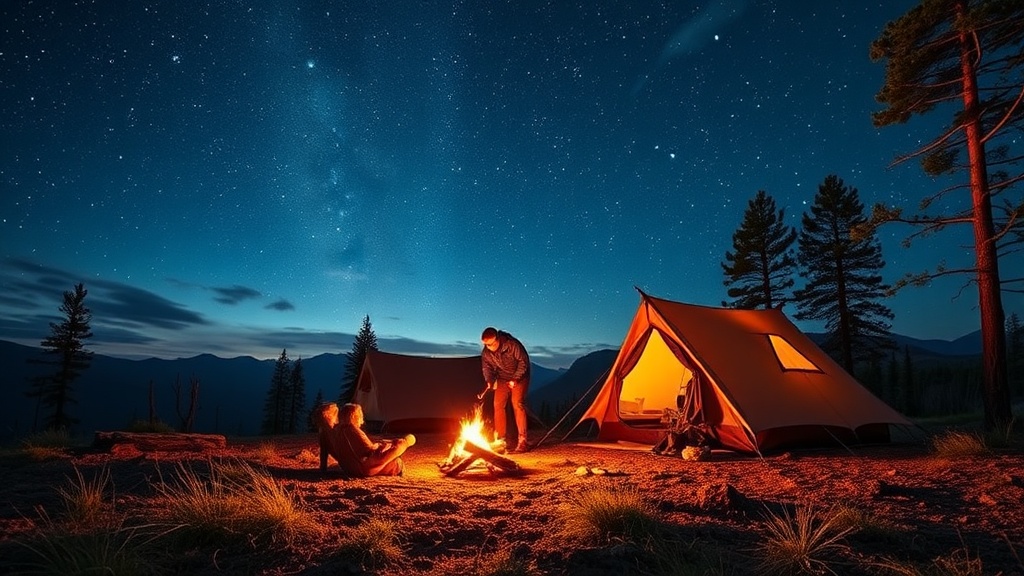
The Complete Guide to Wild Camping: Essential Tips for Beginners

This guide breaks down everything you need to know before heading into the backcountry without a campground reservation. From choosing the right gear and finding legal dispersed camping spots to handling waste responsibly and staying safe around wildlife, these practical tips will help you avoid rookie mistakes and actually enjoy your first wild camping experience. You'll find specific gear recommendations, real-world examples from the American Southwest, and actionable steps for planning a trip that doesn't end with a ranger citation—or worse.
What Is Wild Camping (and How Is It Different from Regular Camping)?
Wild camping means pitching a tent outside designated campgrounds—often on public lands where dispersed camping is permitted. Unlike developed campgrounds with fire pits, picnic tables, and bathroom facilities, wild camping puts you in raw, undeveloped terrain. No reservations. No neighbors ten feet away. Just you, your gear, and whatever the landscape offers.
Here's the thing: the experience differs dramatically depending on where you go. On BLM land in the American West, dispersed camping is often free and widely available. In national parks, it's heavily restricted or banned outright. Forest Service lands fall somewhere in between—permitted in most areas, but with specific rules about distance from water sources and trails.
The trade-offs are real. You won't have potable water, trash service, or cell reception. What you get instead is silence, darkness thick enough to touch, and campsites that haven't been Instagrammed into oblivion. For travelers seeking genuine solitude—not the curated kind found at "glamping" resorts—wild camping delivers something no KOA can match.
Where Can You Legally Wild Camp in the United States?
You can legally wild camp on most Bureau of Land Management (BLM) properties, national forest lands, and some state trust lands—provided you follow specific distance requirements from water sources, roads, and developed areas. Private land requires explicit permission. National parks generally prohibit dispersed camping except in designated backcountry zones with permits.
The catch? Every agency has different rules. BLM land—vast stretches of it across Arizona, Utah, Nevada, and New Mexico—typically allows 14 days of free dispersed camping in any 28-day period. Move at least 25 miles to reset your stay. The Forest Service usually requires camping 200 feet from water sources and 150 feet from trails. Some areas, like the desert around Tucson (Zoe Côté's home base), have specific fire restrictions that change seasonally.
Top Regions for Beginner-Friendly Wild Camping
| Region | Land Type | Best For | Key Considerations |
|---|---|---|---|
| Mojave Desert, CA | BLM | Winter trips, desert scenery | Summers exceed 110°F; carry 1 gallon water per person daily |
| Prescott National Forest, AZ | National Forest | First-timers, moderate elevation | Fire restrictions common May-October; check current alerts |
| Dixie National Forest, UT | National Forest | Red rock access, cooler temps | Popular areas fill fast; arrive Thursday or earlier |
| Sonoran Desert, AZ | BLM/State Trust | Winter camping, cactus gardens | Cacti damage easily; watch for tortoises (protected species) |
Worth noting: Forest Service websites often have outdated information. Call the local ranger station directly. You'll get current road conditions, fire restrictions, and occasionally—if you're polite—a specific recommendation for a quiet spot away from the dispersed camping clusters.
What Gear Do You Actually Need for Wild Camping?
You need shelter, sleep systems, water capacity, and navigation tools—everything else varies by terrain and season. The goal isn't minimalist suffering; it's self-sufficiency without overpacking 45 pounds of "just in case" equipment up a washboard road.
Start with the tent. For desert wild camping—where wind, not rain, is your primary threat—the REI Co-op Trail Hut 2 handles gusts better than ultralight options costing twice as much. At $199, it's not flashy. It works. In forested areas with actual precipitation, consider the MSR Hubba Hubba NX ($449) for its superior weatherproofing and packed size that won't swallow your entire trunk.
Sleep systems depend on your cold tolerance and the season. The NEMO Disco 15 ($319) offers spoon-shaped roominess for side sleepers and performs reliably into the high 20s. Pair it with the Therm-a-Rest NeoAir XLite sleeping pad ($184)—the R-value of 4.2 insulates against ground chill that would steal your body heat through lesser pads.
Water is non-negotiable. You can't "wing it" on water planning. The MSR Guardian Purifier ($349) handles viruses, bacteria, and particulates—the gold standard for sketchy water sources. That said, in true desert wild camping, you often won't find water to filter. Carry it. The Reliance Aqua-Tainer 7-Gallon ($25) stores enough for a weekend for two people, and its rectangular shape stacks efficiently in vehicle cargo areas.
The Honest Truth About "Bargain" Gear
Cheap Amazon tents flood the market at $60-$90. Some hold up fine for fair-weather car camping near town. For wild camping—where failure means exposure, not a quick drive home—spend the money on proven equipment. A failed zipper at midnight in 40-degree weather isn't a learning experience. It's misery.
That said, you don't need everything on the REI checklist. Skip the camp chairs (use a foam pad on a rock). Skip the portable shower bags (baby wipes work fine for 2-3 nights). Skip the "survival" gadgets with 14 functions you'll never use. Buy quality where it matters—shelter, sleep, water—and improvise the rest.
How Do You Handle Waste and Leave No Trace?
Pack out everything. Everything. Toilet paper, food scraps, orange peels, apple cores—all of it leaves the site with you. Bury human waste 6-8 inches deep and at least 200 feet from water sources, trails, and camp. Use a trowel (the Sea to Summit Pocket Trowel at $16.95 beats cheap plastic that snaps in hard desert soil).
Here's the thing most beginners miss: "biodegradable" soap doesn't belong in wild water sources. Ever. Even 200 feet away, the phosphates damage aquatic ecosystems. Wash dishes, hands, and yourself with water carried away from streams and springs. Dispose of gray water by scattering it widely on mineral soil—not vegetation.
Fire management deserves serious attention. In many wild camping areas—especially the drought-prone Southwest—wood fires are prohibited year-round or seasonally. The solution isn't complicated: bring a camp stove. The MSR PocketRocket 2 ($44.95) screws onto isobutane canisters and boils water in under four minutes. For coffee purists, the Jetboil Flash ($109) integrates pot and burner with better wind resistance.
If fires are permitted and you choose to have one, keep it small. Use existing fire rings when available. Never cut live vegetation—collect only dead and downed wood. And before bed: drown that fire. Stir the ashes. Drown it again. A fire you "thought was out" has started countless wildfires. Don't be that person.
What About Wildlife Encounters?
Most wildlife wants nothing to do with you. The problems start when animals associate humans with food. Store everything scented—food, toiletries, trash—in hard-sided containers or hung properly (10 feet up, 4 feet from the trunk). In bear country, this isn't optional. In desert environments, you're dealing with rodents, coyotes, and the occasional curious javelina.
Snakes? They're a reality in the Southwest. Watch where you put hands and feet. Shake out boots in the morning. Don't reach into crevices or under rocks without looking first. Rattlesnakes aren't aggressive—they're defensive. Give them space and they'll return the favor.
The catch? Urban-adapted wildlife breaks these rules. Camp near Sedona or Moab and you'll encounter bold mice and ravens that know exactly what a cooler looks like. In these areas, standard precautions aren't enough. Use bear canisters or sealed bins even where bears don't live. A determined raven will unzip backpacks. A mouse will chew through tent fabric to reach trail mix.
How Do You Find and Evaluate Wild Campsites?
Start with apps and forums, but verify everything. Campendium and iOverlander crowdsource dispersed camping locations with GPS coordinates and recent condition reports. FreeRoam offers similar data with offline access. Cross-reference these pins with agency maps—BLM and Forest Service Motor Vehicle Use Maps (MVUMs) show exactly which roads are legal for camping.
Arrive with daylight to spare. The ideal wild campsite checks several boxes:
- Level ground: Not perfectly flat—slight drainage prevents pooling if it rains. Avoid depressions that collect cold air.
- Durable surfaces: Rock, sand, or compacted soil. Never camp on cryptobiotic soil (that dark, crusty stuff in the desert)—it takes decades to recover from footprints.
- Wind protection: Natural barriers like rock formations or dense vegetation. Check for widowmakers—dead trees or branches that could fall.
- Privacy buffer: Visual screening from roads and other camps. In popular areas, 100 feet of vegetation makes the difference between solitude and being part of someone else's view.
Drive slowly on approach. Soft sand, wash crossings, and rocky sections have stranded plenty of vehicles with inadequate clearance. The Subaru Outback that handles Forest Service roads fine might bottom out on desert approaches. When in doubt, park and walk the route first.
What Should First-Timers Practice Before Going Remote?
Set up your tent in the backyard. Twice. Know which pole goes where without reading instructions by headlamp. Test your sleep system on a chilly night—discovering your "20-degree" bag actually chills you at 35 degrees is better at home than 40 miles from town.
Practice your water purification. The MSR Guardian has a specific pumping technique that maximizes flow rate. Learn it before you're tired and dehydrated. Test your stove. Figure out how to simmer pasta without scorching it (pro tip: the PocketRocket 2 benefits from a windscreen in breezy conditions).
Navigation skills matter more than most beginners realize. Download offline maps to your phone using apps like Gaia GPS or CalTopo. Bring a paper backup—batteries die, screens crack, and GPS signals fail in canyons. Know how to read terrain features on a topographic map. That skill doesn't require batteries.
Finally, start close to help. Your first wild camping trip shouldn't be three hours down a 4WD track with zero cell reception. Pick a spot within an hour of town, on a road that sees regular traffic. Build competence and confidence before committing to true remoteness. The wild places aren't going anywhere. Take the time to prepare properly, and they'll wait for you—quiet, dark, and exactly as described.