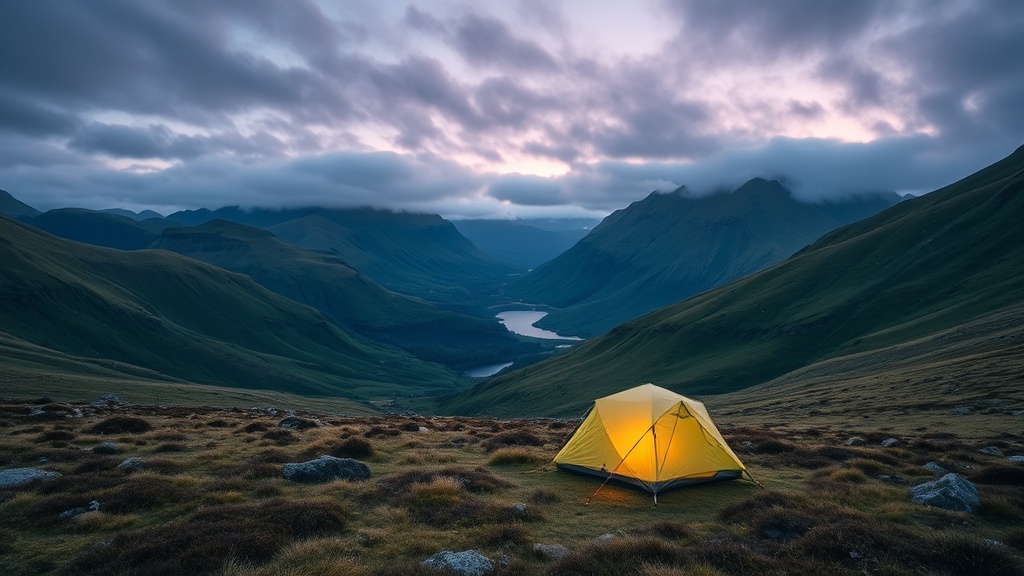
Wild Camping in the Scottish Highlands: A Complete Guide

What Makes Wild Camping in the Scottish Highlands Special?
The Scottish Highlands offer some of Europe's most accessible and dramatic wild camping experiences—rugged mountains, mirror-still lochs, and vast empty glens where the nearest neighbor might be five miles away. This guide covers everything needed to plan a successful trip: where to camp legally, what gear actually performs in Highland weather, how to follow the Outdoor Access Code, and real routes that balance solitude with safety.
Here's the thing about Scotland—it's one of the few places in Britain where wild camping remains legal across most unenclosed land. The Land Reform (Scotland) Act 2003 establishes a right of responsible access, which includes camping. That said, "legal" doesn't mean "anything goes." The Highlands demand respect, preparation, and a willingness to embrace conditions that can shift from brilliant sunshine to horizontal rain within an hour.
Is Wild Camping Legal in the Scottish Highlands?
Yes—wild camping is legal on most unenclosed land in Scotland under the Scottish Outdoor Access Code, with specific exceptions around Loch Lomond & The Trossachs National Park (camping byelaws apply in certain zones) and some estate areas during stag stalking season.
The distinction matters. Unlike England and Wales, where wild camping generally requires landowner permission, Scotland's access rights are statutory. You can pitch a tent on hills, beside lochs, and in open moorland—provided you camp responsibly. The catch? "Responsible" has teeth. Scottish Natural Heritage and Police Scotland can and do enforce against antisocial behavior.
Loch Lomond & The Trossachs introduced seasonal camping byelaws in 2017 covering specific zones between March and September. Permits cost £3 per night through the national park's permit system—or camp outside the management zones for free. Most of the Highlands proper (north of the Great Glen) faces no such restrictions.
Stalking season—roughly July through October—brings temporary access restrictions on some private estates. Red deer management is serious business in the Highlands, and walkers may encounter signs requesting route changes during this period. These aren't legally binding in most cases, but ignoring them damages the access culture that makes Scottish camping possible.
The Outdoor Access Code in Practice
The code boils down to three principles: respect the interests of others, care for the environment, and take responsibility for your own actions. In practice, this means:
- Camping high and hidden—at least 100 meters from roads and buildings where possible
- No fires on peaty ground or during dry spells (peat burns underground for weeks)
- Carrying out all waste—including toilet paper
- Moving on after two or three nights in one spot
- Keeping groups small and quiet
Worth noting: the "leave no trace" ethic runs deep in Scottish hill culture. Even orange peel and apple cores get packed out—decomposition happens slowly at altitude, and imported food waste disrupts local ecosystems.
Where Are the Best Wild Camping Spots in the Highlands?
The best spots balance dramatic scenery with practical considerations—water sources, shelter from prevailing winds, and escape routes if weather deteriorates. Here's a comparison of three classic Highland regions:
| Region | Terrain | Best For | Access | Considerations |
|---|---|---|---|---|
| Torridon | Sandstone mountains, sea lochs | Photography, scrambling | Train to Achnasheen, bus connections | Midges are notorious June-August |
| Assynt | Isolated peaks, ancient geology | Solitude, wild swimming | Bus from Inverness to Ullapool | Limited phone signal; carry PLB |
| Glen Coe | Dramatic ridges, accessible valleys | First-timers, classic views | Citylink buses from Glasgow/Fort William | Busy; camp high to avoid crowds |
Torridon delivers that Jurassic Park feeling—ancient sandstone cliffs rising directly from sea lochs, red deer wandering through camp at dawn. The Beinn Eighe National Nature Reserve offers particularly stunning high-level pitches above Loch Maree, though the approach requires solid navigation skills.
Assynt feels different entirely. This northwestern corner contains some of Britain's oldest rock—Lewisian gneiss formed three billion years ago. Suilven, Stac Pollaidh, and Quinag rise like islands from a world of lochans and peat bog. It's harder to reach and harder to walk through, which keeps crowds away.
Glen Coe presents the classic Highland postcard—Buachaille Etive Mor, the Three Sisters, the Aonach Eagach ridge. The tradeoff is popularity. During summer weekends, the valley floor resembles a music festival. The solution? Walk higher. Coire Gabhail (the Lost Valley) offers spectacular camping at 400 meters, and most day-trippers don't make it past the first waterfall.
What Gear Do You Actually Need for Highland Camping?
Highland weather punishes inadequate gear. Temperatures at sea level might read mild, but wind chill on exposed ridges drops effective temperatures dramatically. Rain arrives horizontally. Midges—tiny biting flies—can make life miserable from June through August in sheltered glens.
For shelter, the Terra Nova Laser Compact 2 remains a popular choice among Scottish backpackers—sub-kilogram weight, decent weather resistance, and enough space for one person plus kit. Cheaper alternatives like the Decathlon Forclaz Trek 900 perform adequately for occasional trips, though condensation management requires more attention.
Sleep systems depend on season. A three-season bag rated to -5°C works for most summer conditions, but Scotland's "summer" is relative. The Alpkit PipeDream 400 offers a solid warmth-to-weight ratio using ethically sourced down. Pair it with an inflatable mat—foam mats don't cut it on cold, damp ground. The Therm-a-Rest NeoAir XTherm provides excellent insulation for the weight, though budget campers manage with the Exped SynMat HL.
Navigation isn't optional. Phone batteries die in cold weather. GPS apps fail without signal. Carry a proper compass—the Silva Expedition 4 is the standard—and a 1:25,000 Ordnance Survey Explorer map for your area. Mountain Rescue England and Wales (with Scottish equivalents) respond to hundreds of preventable callouts annually from walkers who relied on smartphones.
Midge protection deserves serious attention. The Smidge repellent works better than DEET for Scottish midges and doesn't degrade synthetic fabrics. A head net—seriously, a head net—transformes August evenings from torture to tolerable. The Sea to Summit Nano Mosquito Head Net weighs 26 grams and justifies every gram when the swarm descends.
How Do You Get to the Scottish Highlands Without a Car?
Public transport reaches surprisingly deep into the Highlands, though schedules require planning. The Caledonian Sleeper train from London deposits backpackers in Fort William by morning, refreshed and ready to walk. The West Highland Line—regularly voted among the world's most scenic rail journeys—continues to Mallaig via Glenfinnan (of Harry Potter viaduct fame).
Citylink buses connect Glasgow and Inverness to most Highland settlements. The Scottish Citylink Explorer Pass offers unlimited travel for specific durations—worthwhile for multi-region trips. Bealach na Bà, Applecross, Torridon, Ullapool, and Durness all have scheduled service, though frequencies drop to once daily (or less) in winter.
Hitchhiking remains culturally accepted and relatively common on Highland roads. That said, solo travelers—especially women—should exercise standard precautions. Many backpackers use the informal "bothy network"—basic stone shelters maintained by the Mountain Bothies Association—as staging points between wild camps. Bothies cost nothing, have no facilities, and operate on a first-come basis.
What About Food, Water, and Resupply?
Water sourcing defines Highland camping. The region's rivers and lochs offer plentiful clean water—visually, at least. The protozoan parasite Giardia exists in Scottish water sources, though incidence remains low. Most experienced campers drink untreated from fast-flowing streams high in the hills, but purification tablets or filters eliminate the lottery element.
The MSR Guardian purifier handles viruses, bacteria, and protozoa mechanically—no chemical taste, no waiting. For lighter loads, the Sawyer Squeeze filters bacteria and protozoa (not viruses) at 85 grams. Chemical treatments using chlorine dioxide work but require 30-minute contact times and leave a faint taste.
Food resupply requires strategic planning. Major supermarkets exist in Inverness, Fort William, Portree, and Ullapool. Beyond these hubs, options shrink to expensive village shops with limited hours. Many backpackers cache food in plastic boxes at road crossings, retrieving them during loop hikes. Others arrange parcel holds at post offices along their route—call ahead, as policies vary.
Dehydrated meals from Firepot or Real Turmat taste better than standard supermarket options and pack smaller. That said, Scottish oatcakes, smoked mackerel, and aged cheddar from village shops provide more authentic trail cuisine at lower cost.
When Should You Go?
May and September offer the sweet spot—long days, fewer midges, and accommodation prices that haven't peaked. June through August brings the best weather statistically but also the worst biting insects and busiest trails. Winter camping is possible for experienced parties; the Highlands rarely see extreme cold, but wind, short days, and challenging conditions demand respect.
The Scottish Highlands don't do "perfect." They do raw, changeable, and unforgettable. Pack the right kit, read the weather, respect the land and the people who steward it—and you'll find camp spots that stay with you long after the tent's packed away.