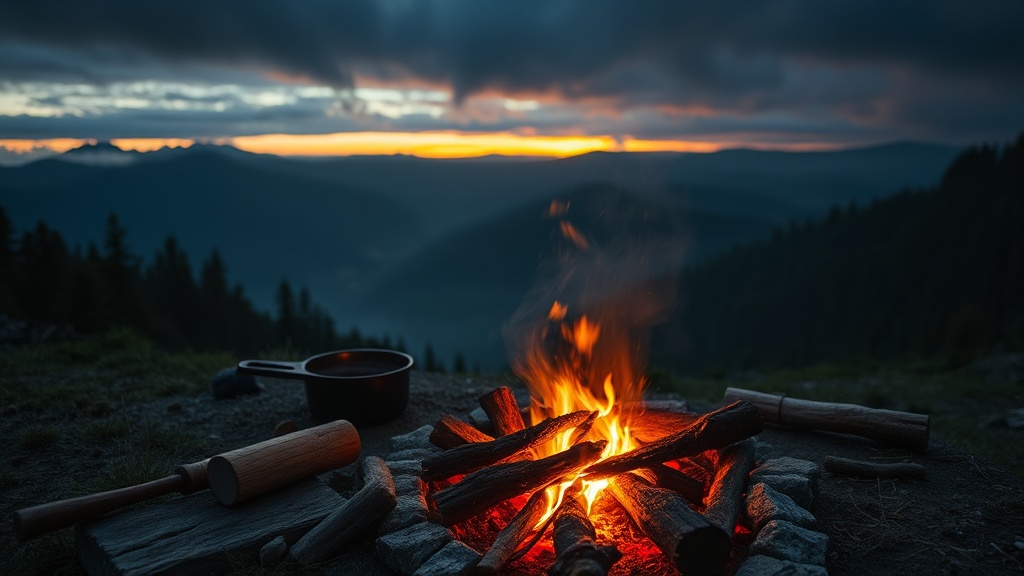
Cooking Over an Open Flame in the Deep Wilderness

A hiker reaches a high plateau after six hours of climbing, only to realize their lightweight canister stove has malfunctioned in the thinning air. They are left staring at a cold pot of dehydrated meal, the sun dipping below the ridge, with no way to boil water. This scenario happens more often than you’d think. This guide breaks down the mechanics of cooking over an open flame, the specific wood types that work best, and the safety protocols required to prevent forest fires in the deep wilderness.
Cooking with fire isn't just about heat; it's about managing fuel, airflow, and temperature. While a Jetboil is faster for a quick coffee, there is a specific satisfaction in a crackling flame that a gas canister can't replicate. However, doing this wrong can lead to permanent damage to the ground or, worse, a wildfire.
How Do You Start a Fire Safely in the Wilderness?
To start a fire safely, you must establish a designated fire ring or use a portable fire pan to prevent heat from scarring the earth. Most seasoned campers use a small, cleared area of mineral soil or a specialized metal fire pit to ensure the heat doesn't reach organic matter below. If you're in a high-alpine area or a national forest, check the U.S. Forest Service regulations first—many areas strictly prohibit any open flames due to fire danger levels.
Start by gathering three stages of fuel: tinder, kindling, and fuel wood. You can't just throw a large log on a pile of dry leaves and expect a controlled cook. You'll need a small, controlled flame first.
- Tinder: Smallest bits of dry material like dried grass, shaved bark, or even cotton balls soaked in petroleum jelly (a classic trick).
- Kindling: Twigs roughly the size of a pencil. This bridges the gap between your tinder and your actual cooking fuel.
- Fuel Wood: Larger branches that can sustain a steady heat for a meal.
I always recommend having a backup method. Even if you're a master at the bow drill, the wind can be a real pain. Keep a small piece of waterproof fire starter or a dedicated lighter in your kit.
What Is the Best Wood for Cooking?
The best wood for cooking depends on whether you want high, intense heat or a slow, steady ember bed. For searing a steak or heating a cast iron skillet, you want dense hardwoods; for a quick boil, lighter softwoods work fine.
Hardwoods like oak or maple produce long-lasting coals that stay hot for a long time. These are great if you're making a slow stew or a hearty meal. Softwoods like pine or cedar ignite quickly and burn hot and fast, but they tend to create more soot and can flare up unpredictably. If you're using a cast iron pan, be careful with pine—the resin can create a nasty smell and a lot of smoke.
| Wood Type | Heat Profile | Best Use Case |
|---|---|---|
| Hardwoods (Oak, Hickory) | Long-lasting, steady embers | Slow cooking, heavy cast iron |
| Softwoods (Pine, Fir) | High heat, fast burn | Boiling water, quick heat |
| Birch Bark | Extremely high, instant flame | Starting the initial fire |
One thing to watch out for is the moisture content. Wet wood is a recipe for frustration. If you pick up a stick and it bends rather than snaps, it's too wet to burn. You'll end up with more smoke than heat, and your dinner will be cold and soggy.
How Much Gear Do You Need for Fire Cooking?
You need a combination of heat-resistant cookware and tools for managing the flame. It's not just about the pan; it's about the ability to move things around safely.
If you're serious about this, don't use your delicate backpacking titanium pot over a large flame. The intense, uneven heat of a wood fire can actually warp thin metal or create "hot spots" that burn your food. Instead, opt for cast iron or heavy-duty stainless steel. Brands like Lodge make incredible cast iron skillets that can handle the punishing heat of a wood fire without breaking a sweat.
Here is a quick checklist of what to pack:
- Heavy-duty Skillet or Pot: Cast iron is the gold standard for durability.
- Long-handled Tongs: You don't want to get your hands near the embers to move a log.
- Heat-resistant Gloves: Essential for moving hot pots or adjusting the fire.
- A Reliable Fire Starter: Even if you're confident, always bring a backup.
If you're still figuring out your kit, check out my previous post on essential gear and safety tips. It covers the basics of what to pack before you even think about the fire.
Wait, a quick word on the "heat" of the fire. You don't actually want to cook over the flames. Flames are erratic and will burn your food instantly. You want to cook over the embers. Once the flames die down and you have a bed of glowing coals, that's when you place your pan. This provides a much more consistent temperature.
The physics of a fire can be tricky. If you build a "teepee" structure, you'll get a lot of vertical heat, which is good for starting the fire but bad for cooking. Once the fire is established, transition to a "log cabin" or "platform" style to create a flat surface for your coals to settle. This creates a stable cooking surface.
Don't forget the wind. Even a light breeze can turn a small cooking fire into a runaway blaze. Always build your fire in a sheltered spot, but make sure there is enough airflow so you don't smother the embers. If you're cooking in a high-wind area, a small windscreen or even a circle of stones can make a massive difference.
When you're done, the most important part is the "dead out" check. Never leave a fire until it is completely cold. Pour water on it, stir the ashes with a stick, and add more water. If the ashes are still warm to the touch, it's not done. I've seen people leave "smoldering" fires that turned into forest fires an hour after they hiked away. It's a mistake you only make once.
If you find yourself needing to practice your camp skills in a more controlled environment, you might enjoy mastering the art of wild camping. It's a great way to build confidence before you head into the deep backcountry where resources are much thinner.
Cooking with fire is a skill that takes practice. It's not just a way to make food; it's a way to connect with the environment. Just respect the flame, and it will treat you well.